
In the previous post, we discussed when it is most appropriate to purchase an annuity. This post further explains how annuities work and introduces the two most popular growth-oriented annuity products available in the U.S. market.
For retirement planning purposes, an annuity can be understood as an insurance-based financial product that combines asset accumulation with lifetime income. Its primary objective is not to generate the highest possible investment return, but rather to provide a more stable and predictable stream of income during retirement while helping reduce market risk and longevity risk.
I. The Basic Structure of an Annuity
An annuity contract generally consists of two distinct but closely related value concepts and two different phases (see Figure 1).
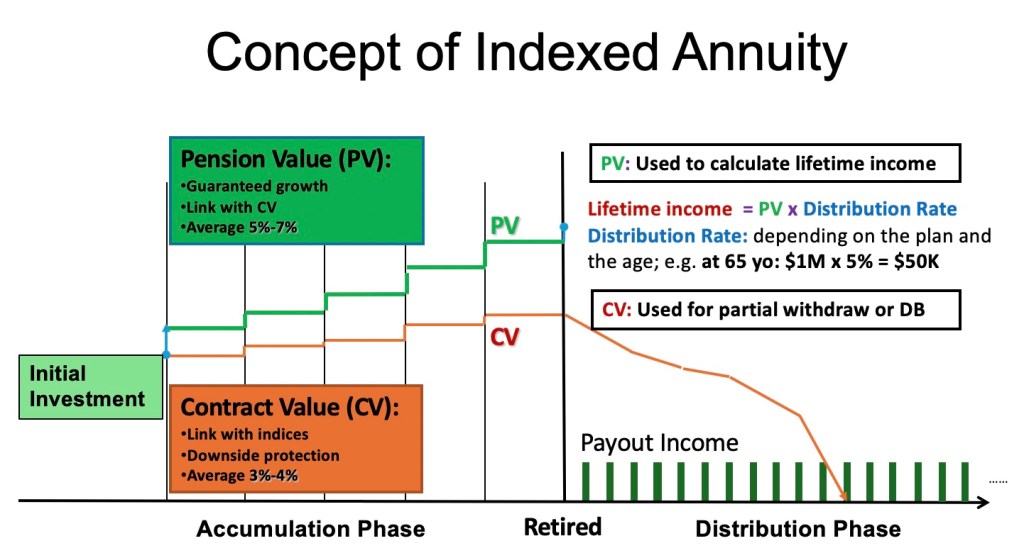
Figure 1. Illustration of an Indexed Annuity
(The illustration assumes that the initial Income Value includes an initial premium bonus.)
(1) Contract Value vs. Income Value
These are two concepts that are most commonly misunderstood by individuals purchasing an annuity.
1. Contract Value
The Contract Value (also referred to as the Accumulation Value or Account Value) represents the actual accumulated value of the annuity contract. It is the amount of money that belongs to the contract owner and generally represents the contract’s available cash value.
Its primary characteristics include:
- Partial withdrawals are generally permitted, subject to the terms and conditions of the contract.
- The contract may be surrendered, although surrender charges may apply.
- It generally serves as the basis for calculating the Death Benefit payable to beneficiaries.
- Its value changes over time based on the applicable interest crediting method, index performance, or investment performance, depending on the type of annuity.
Simply put, the Contract Value is the actual value of the money accumulated in your annuity account.
2. Income Value
The Income Value (also called the Benefit Base, Income Base, or Pension Value by some insurance companies) is not an account value that can be withdrawn or surrendered. Instead, it is a calculation value established by the insurance company solely for determining the amount of guaranteed future lifetime income.
Its primary characteristics include:
- It cannot be withdrawn as a lump sum.
- It cannot be received upon surrender of the contract.
- It is generally not payable to beneficiaries as part of the death benefit.
- It exists solely for calculating future guaranteed lifetime income.
For example:
Assume:
- Contract Value: $320,000
- Income Value: $500,000
The insurance company specifies:
- Income begins at age 65
- Guaranteed Payout Rate = 5%
Therefore,
Annual Guaranteed Lifetime Income
= $500,000 × 5%
= $25,000 per year
As illustrated above, the guaranteed income is calculated based on the Income Value, not the Contract Value.
Consequently, many annuities that include an Income Rider maintain two separate values simultaneously:
- Contract Value — the actual accumulated cash value of the contract.
- Income Value — the value used exclusively to calculate future guaranteed retirement income.
(2) Accumulation Phase vs. Distribution Phase
1. Accumulation Phase
The Accumulation Phase is the period during which retirement assets are being built after the annuity has been purchased.
The primary objectives during this phase include:
- Building retirement assets
- Achieving tax-deferred growth
- Benefiting from compound interest over time
- Managing and reducing market risk
During this phase:
- Income distributions are generally deferred, and withdrawals are typically minimized whenever possible.
- The Contract Value continues to grow.
- If an Income Rider has been elected, the Income Value may also increase according to the provisions of the contract.
Many individuals choose to purchase annuities between the ages of 45 and 60 in order to allow 10 to 20 years for asset accumulation before retirement.
2. Distribution Phase
The Distribution Phase begins once retirement income payments start.
The primary objectives during this phase include:
- Creating a reliable retirement income stream
- Providing guaranteed lifetime income
- Reducing the impact of market volatility on retirement living
- Supplementing Social Security benefits and pension income
Income payments may generally be received:
- Monthly
- Quarterly
- Semi-annually
- Annually
Certain annuity products may also provide additional features, including:
- Joint Lifetime Income for spouses
- Guaranteed minimum income payments
- Death benefit protection
- Other optional contractual benefits
II. The Two Most Popular Growth-Oriented Annuities in the United States
Today, the two most popular growth-oriented annuity products in the U.S. retirement market are the Fixed Indexed Annuity (FIA) and the Registered Index-Linked Annuity (RILA). Although both products are linked to the performance of a market index, they differ significantly in their approaches to risk and return.
(1) Fixed Indexed Annuity (FIA)
A Fixed Indexed Annuity (FIA) is one of the most widely used annuity products for retirement planning in the United States. Its design philosophy is to provide principal protection while allowing contract owners to participate in a portion of the market’s upside potential.
How an FIA Works
The growth of an FIA is generally linked to the performance of a market index, such as the S&P 500. However, the contract owner’s premium is not invested directly in the stock market. Instead, the insurance company combines fixed-income investments with derivative strategies (such as index options) to provide index-linked growth opportunities while maintaining contractual principal protection.
Typical characteristics of an FIA include:
- Principal Protection: Negative index performance generally does not reduce the contract value because of market losses (except for contract charges, withdrawals, or other applicable contractual provisions).
- Participation in Market Gains: When the selected index increases, interest may be credited based on the contract’s Participation Rate, Cap Rate, Spread, or other crediting methodology.
- Tax-Deferred Growth: Earnings generally grow tax-deferred until distributions are taken.
- Optional Income Rider: A guaranteed lifetime income rider may be added to establish a future stream of guaranteed retirement income.
Suitable For
- Individuals approaching retirement or already retired
- Conservative investors with relatively low risk tolerance
- Those seeking to reduce the impact of market volatility
- Individuals who prioritize principal protection and long-term retirement income planning
(2) Registered Index-Linked Annuity (RILA)
A Registered Index-Linked Annuity (RILA) is a relatively newer annuity product that has experienced significant growth in recent years. It is often viewed as a product positioned between an FIA and a Variable Annuity (VA).
How a RILA Works
Like an FIA, a RILA is linked to the performance of a market index. However, unlike an FIA, the contract owner agrees to absorb a specified amount of downside market risk in exchange for greater upside growth potential.
Common downside protection mechanisms include:
- Buffer: For example, under a 10% Buffer, the insurance company absorbs the first 10% of market losses. Any losses beyond the buffer are generally borne by the contract owner.
- Floor: For example, a contract with a -10% Floor generally limits the owner’s maximum annual loss to approximately 10%, subject to the specific provisions of the contract.
Because contract owners assume a limited amount of market risk, RILAs often offer:
- Higher caps—or in some cases, no cap at all—on potential returns
- Higher participation rates
- Greater long-term growth potential
Suitable For
- Individuals who still have several years before retirement
- Investors who are comfortable accepting limited market fluctuations
- Those seeking greater upside potential than an FIA may provide
- Investors who wish to achieve a balance between risk and long-term growth
III. Key Differences Between an FIA and a RILA
| Comparison | FIA | RILA |
| Principal Protection | Generally provides strong principal protection | Assumes a predetermined level of market downside risk |
| Upside Growth Potential | Moderate | Higher |
| Downside Risk | Contract value generally is not reduced due to negative index performance (subject to contract provisions) | Limited downside exposure controlled through Buffer or Floor mechanisms |
| Interest Crediting Method | Participation Rate, Cap Rate, Spread, etc. | Participation Rate, Cap Rate, Buffer, Floor, etc. |
| Suitability for Retirement Income Planning | Excellent; commonly paired with an Income Rider | Some products offer income features, but the primary focus is generally long-term growth |
| Ideal Investor | Conservative investors and those approaching retirement | Moderate-risk investors seeking greater long-term growth potential |
IV. Summary
An annuity may be viewed as an insurance-based financial solution that combines asset accumulation with lifetime retirement income. Whether an individual selects an FIA or a RILA, neither product should be viewed as a traditional stock market investment. Rather, both are insurance contracts designed to help individuals and families protect assets, accumulate wealth on a tax-deferred basis, and establish dependable retirement income.
In general, FIAs emphasize principal protection and stable lifetime income, making them well suited for individuals whose primary retirement objective is dependable cash flow. RILAs, on the other hand, emphasize accepting a limited amount of investment risk in exchange for greater long-term growth potential, making them more appropriate for investors with a higher tolerance for risk who are seeking increased opportunities for long-term appreciation.
In practice, retirement planning should always be tailored to each individual’s circumstances, including age, expected retirement date, risk tolerance, retirement income needs, and overall asset allocation strategy. Selecting the most appropriate annuity product—or combining different types of annuities within a comprehensive retirement plan—can help achieve long-term financial security, sustainable retirement income, and greater confidence throughout retirement.




Leave a Reply