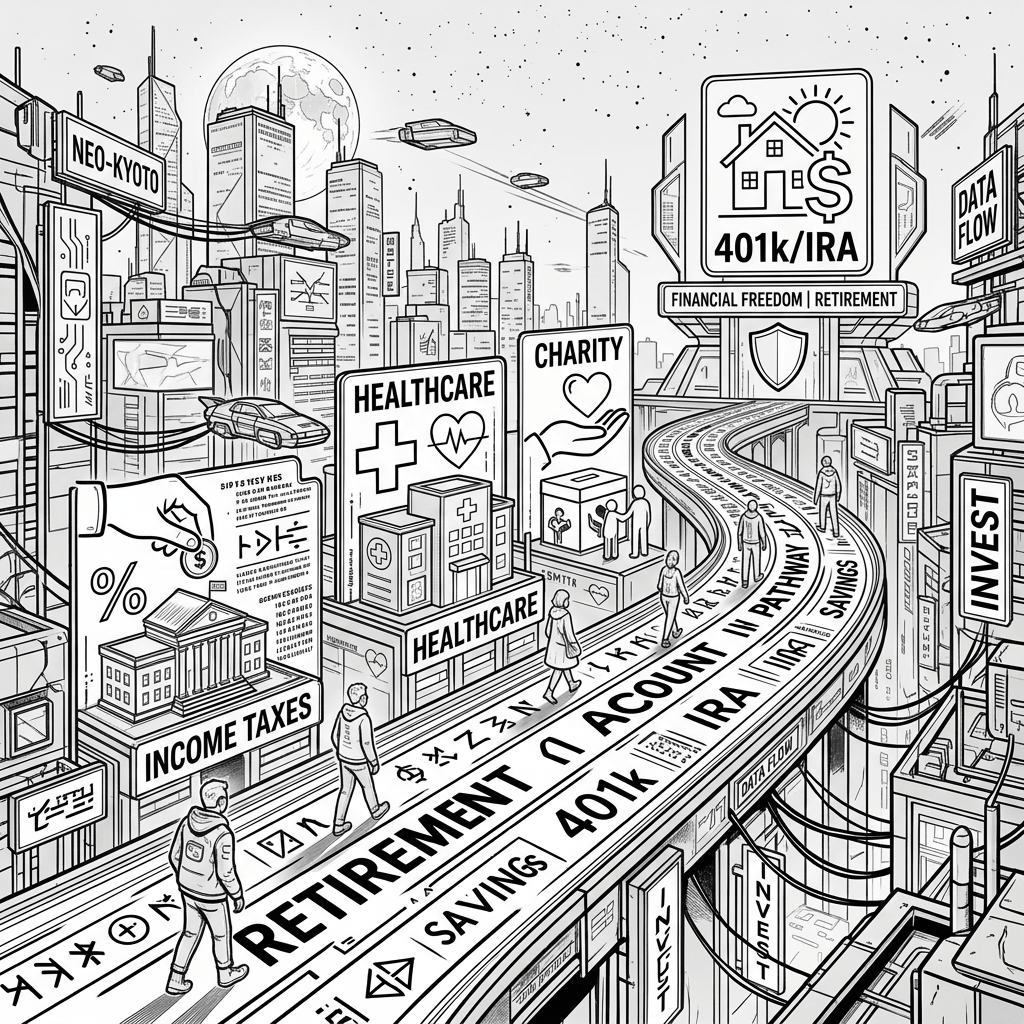
For many who have worked in the U.S. for years with stable income—or those who switch jobs frequently—the variety of retirement accounts such as 401(k), 403(b), Roth IRA, and Traditional IRA can be overwhelming. We all know we should prepare for the future, but where exactly should we start? Should you first capture your employer match, or prioritize contributions to a Roth account? Each decision can significantly influence your long-term taxes and retirement lifestyle.
This article provides a clear, structured overview of the retirement account types available in the U.S. market.
Broadly speaking, retirement accounts fall into two major categories:
- Individually established accounts
- Employer-sponsored plans
Each category has its own eligibility rules, contribution limits, tax structures, advantages, drawbacks, and potential risks. Below, we break down these accounts in detail so you can better understand which options fit your financial and tax strategy.
I. Individually Established Retirement Accounts (Individual Retirement Accounts, IRAs)
These accounts are opened directly by individuals through banks, brokerage firms, or other financial institutions. They are ideal for freelancers, part-time workers, or anyone without access to an employer retirement plan. IRAs offer high flexibility and personal control, though contribution limits are lower and there is no employer match.
For 2025, the combined annual IRA contribution limit for all personal IRAs is $7,000 (or $8,000 for those age 50+).
Investment choices vary widely—stocks, bonds, ETFs, mutual funds—but must follow IRS rules to avoid prohibited transactions such as lending to oneself or self-dealing.
1. Traditional IRA
Key Features:
A Traditional IRA allows pre-tax contributions. Money grows tax-deferred until withdrawn in retirement, when it is taxed as ordinary income. Funds from employer plans can also be rolled over into a Traditional IRA.
Eligibility:
Anyone with earned income (wages, salary, etc.) is eligible. There is no age limit. Best suited for individuals who expect to be in a lower tax bracket during retirement.
Contribution Limit (2025):
- $7,000 annually
- Additional $1,000 catch-up for age 50+
Tax Structure:
- Contributions may be tax-deductible, depending on income and whether you are covered by an employer plan.
- Deduction phase-out (2025):
- Single filers with MAGI $79,000–$89,000
- Married filing jointly $125,000–$145,000
- Deduction phase-out (2025):
- Growth is tax-deferred.
- Withdrawals are taxed as ordinary income.
Advantages:
- Low entry barrier—nearly anyone with earned income can open one.
- Flexible investment choices.
- Tax-deferred growth helps reduce current taxable income.
- Attractive for high-income earners seeking immediate tax savings.
Drawbacks & Risks:
- Deduction limits restrict high-income earners.
- Withdrawals before age 59½ are generally subject to a 10% penalty (exceptions apply for first-time home purchases, education, etc.).
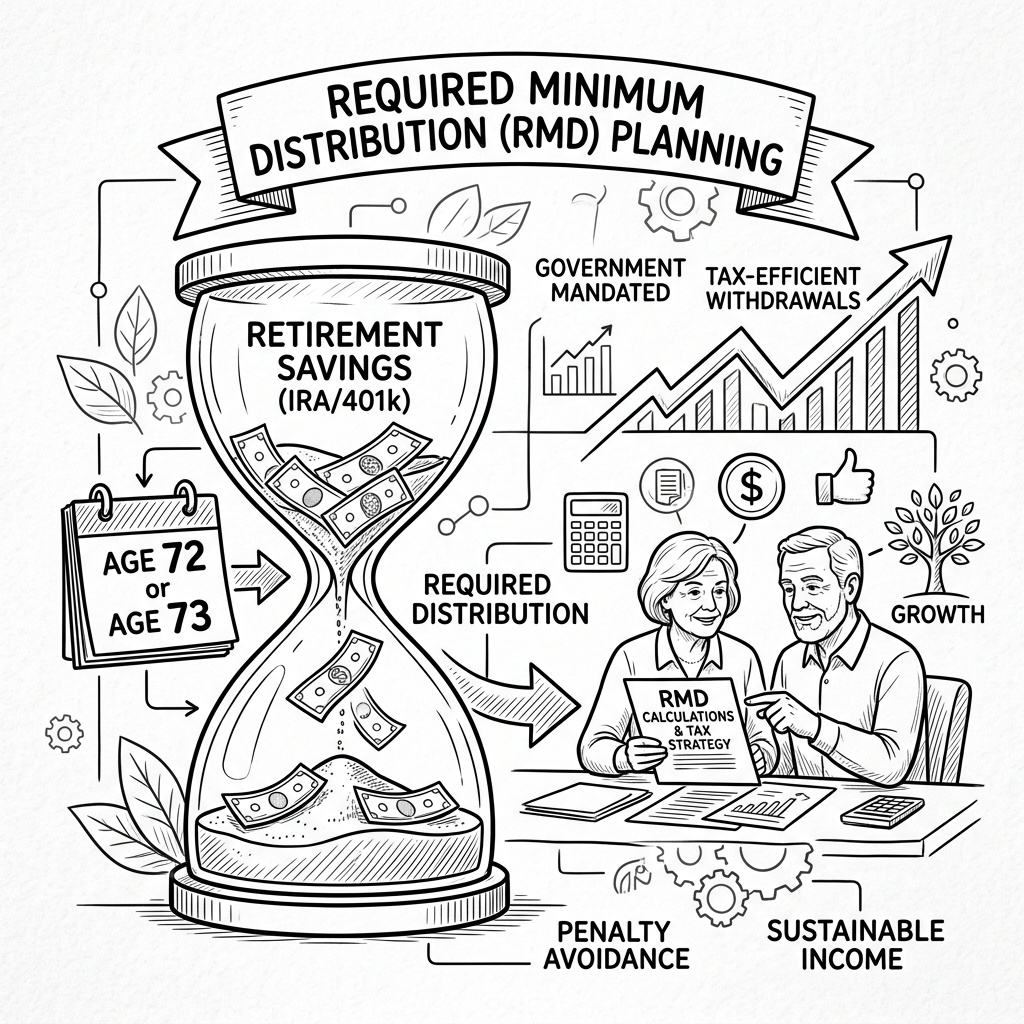
- Required Minimum Distributions (RMDs) begin at age 73—noncompliance can trigger a 50% penalty.
- Future tax rates are unpredictable, which may lead to higher taxes later.
2. Roth IRA
Key Features:
Roth IRA contributions are made with after-tax dollars. Qualified withdrawals—including investment gains—are completely tax-free. No RMDs apply during the owner’s lifetime, making Roth IRAs ideal for long-term planning and legacy transfers.
Eligibility:
Must have earned income, but subject to IRS income limits.
Income Limits (2025):
- Full contribution for single filers below $146,000 (phase-out to $161,000)
- Full contribution for married filing jointly below $230,000 (phase-out to $240,000)
High-income earners may use the Backdoor Roth method (Traditional IRA → Roth conversion), but must follow the pro-rata rule carefully.
Contribution Limit:
Same as Traditional IRA:
- $7,000 annually, or
- $8,000 for age 50+
Tax Structure:
- Contributions are not deductible.
- Growth and qualified withdrawals are entirely tax-free (5-year rule + age 59½).
- Principal contributions can be withdrawn at any time tax- and penalty-free.
Advantages:
- Tax-free long-term growth is extremely valuable.
- No RMDs—ideal for flexible retirement income planning and estate planning.
- Contributions can be withdrawn at any time.
- Highly suitable for younger investors or those in lower tax brackets.
Drawbacks & Risks:
- Income limits restrict contributions.
- No upfront tax deduction—may strain cash flow.
- Backdoor Roths require careful tax planning.
3. SEP IRA (Simplified Employee Pension)
Best For:
Self-employed individuals and small-business owners.
Contribution Limits (2025):
- Up to 25% of compensation
- Maximum around $69,000
Only employers (including self-employed individuals acting as employers) can contribute.
Advantages:
- High contribution limits—very beneficial for high-income self-employed individuals.
- Easy to set up, low administrative cost.
Drawbacks & Risks:
- Must contribute the same percentage for all eligible employees—can become costly.
- No Roth version; only tax-deferred.
4. Solo 401(k) (Individual 401(k))
Best For:
Self-employed individuals or married couples running a business with no additional employees.
Contribution Limits (2025):
- Employee contribution: up to $23,000 (plus $7,500 catch-up)
- Employer contribution: up to 25% of compensation
- Combined limit up to $69,000 (or $76,500+ for age 50+)
Advantages:
- Offers both Traditional and Roth options.
- Higher contribution potential than SEP IRAs.
- Roth Solo 401(k) can avoid RMDs.
Drawbacks:
- More administrative work—Form 5500 required once assets exceed $250,000.
- Not available if the business has full-time employees other than the owners.
Other IRA Variants
- Spousal IRA: Allows a working spouse to contribute on behalf of a non-working spouse.
- Payroll Deduction IRA: Contributions are made via payroll, but no employer match is allowed.
General Risks for IRAs:
Market volatility, self-management responsibility, and investment discipline. Diversification and periodic review are recommended.
II. Employer-Sponsored Retirement Accounts
These plans are established and overseen by employers. They often include employer contributions or matching and have much higher contribution limits than IRAs. Most are regulated by ERISA to protect employees.
Employer plans provide the advantage of “free money” through employer matching but come with lower flexibility.
The overall annual contribution limit under Section 415(c) for 2025 is $70,000 (employee + employer).
1. Defined Contribution Plans
(1) 401(k) Plans
Best For:
Employees of private-sector companies.
Key Features:
- Pre-tax Traditional contributions and, in many plans, Roth options.
- Employer matching is common (typically 3–6%).
- Automatic enrollment is increasingly common.
Contribution Limits (2025):
- Employee: $23,000 (plus $7,500 for age 50+)
- Employer match does not count toward the employee limit but counts toward the $70,000 combined limit.
Tax Features:
- Tax-deferred growth; early withdrawals may incur penalties.
- RMDs begin at age 73 (Roth 401(k)s no longer have RMDs starting 2024).
- Employer match is always Traditional (pre-tax).
Advantages:
- Significantly higher limits than IRAs.
- Employer match accelerates savings (“free money”).
- Convenient payroll deduction.
Drawbacks & Risks:
- Investment options may be limited.
- Fees vary widely.
- Early withdrawal penalties.
- Employer financial stability risk for certain plan types.
(2) 403(b) Plans
Best For:
Employees of public schools, hospitals, and non-profit organizations.
Key Features:
Similar to 401(k), but often includes annuity options.
Contribution Limits:
Same as 401(k): $23,000 + $7,500 catch-up.
Some employees may qualify for an additional 15-year service catch-up.
Risks:
Higher fees or longer surrender periods for certain annuity products.
(3) 457(b) Plans
Best For:
State/local government workers and certain non-profit employees.
Key Features:
- No 10% early withdrawal penalty for government 457(b)s.
- Limits similar to 401(k), but contributions can be stacked with 401(k)/403(b).
Advantages:
Highly flexible distribution options.
Risks:
Non-government 457(b) assets may be subject to employer creditors.
(4) Profit-Sharing Plans
Employer contributions vary annually depending on profits.
Contribution limit: up to $70,000 (2025).
2. Defined Benefit Plans (Pension Plans)
Key Features:
Employers promise a fixed retirement benefit based on salary and years of service. Employer bears the investment risk.
Eligibility:
Typically offered to long-term employees. Less common in recent decades.
Contribution/Benefit Limits (2025):
Maximum annual benefit up to $275,000, based on actuarial calculations.
Tax Features:
Employer contributions are tax-deductible; distributed benefits are taxed as ordinary income.
Advantages:
- Guaranteed lifetime income options.
- Employer-funded.
Drawbacks & Risks:
- Lack of portability when changing jobs.
- Employer solvency risk (partially insured by PBGC).
3. Plans for Small Businesses and the Self-Employed
(1) SEP IRA — discussed earlier
(2) Solo 401(k) — discussed earlier
(3) SIMPLE IRA
Best For: Small businesses with 100 or fewer employees.
Features:
- Employee pre-tax contributions + employer match (usually 3%) or 2% nonelective employer contribution.
- Lower cost than 401(k).
Contribution Limits (2025):
- Employee: $16,500 (plus $4,000 for age 50+)
- Employer: 2% fixed or up to 3% match
Risks:
Early withdrawals within two years may incur a 25% penalty.
Overall Comparison
- Individual IRAs offer high flexibility, Roth tax benefits, and easy rollover options, but lower contribution limits and no employer match.
- Employer plans offer much higher contribution potential and employer match but depend heavily on employer policies and may come with vesting schedules.
- Hybrid options (SEP, SIMPLE, Solo 401(k)) serve freelancers and small business owners.
Tax Impact:
Employer plans may include loan options (up to $50,000), whereas IRAs do not. IRAs allow easy rollover upon job changes.
Risk Factors to Consider:
Market volatility, inflation, and changing tax laws (such as SECURE 2.0 changes to RMDs) affect all types of retirement accounts.
Studies show only about 14% of workers maximize their 401(k) contributions. A good starting point is always to capture the employer match, diversify investments, and review your accounts annually.
Ultimately, the best strategy depends on age, income level, tax bracket, employment status, and long-term retirement goals. For example, younger individuals seeking long-term growth may prefer Roth accounts, while those nearing retirement may benefit more from Traditional accounts.



 Yushield - Financial Safety Starts Here
Leave a comment